Genetic Diversity
Genetic Ranks
Genetic Structure
Kinship
ROH
mtDNA, X,Y
Traits
Health
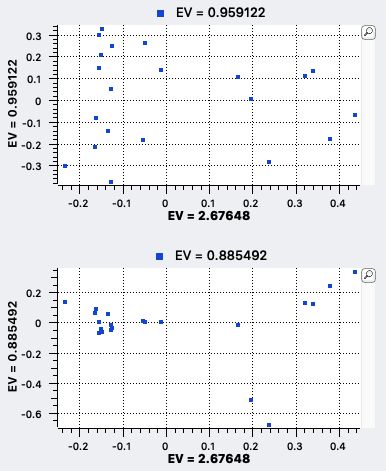
PCA
Genetic Diversity
Genetic Ranks
Sorted by rank
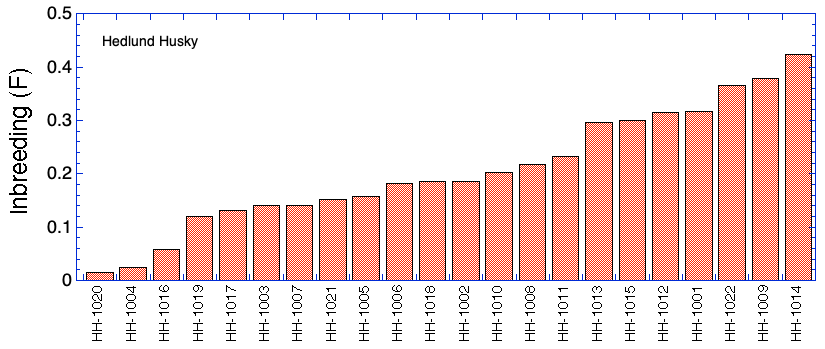
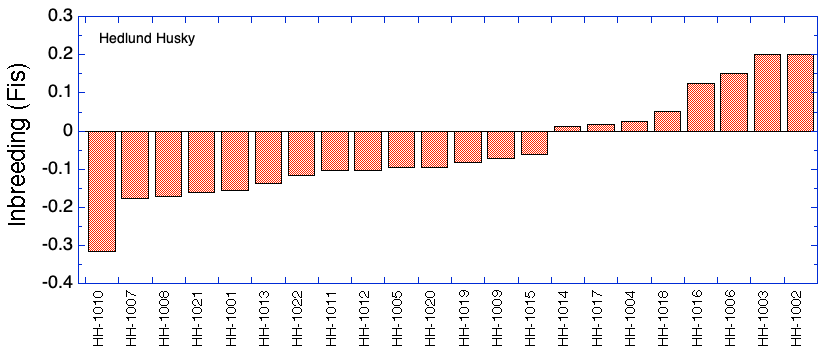
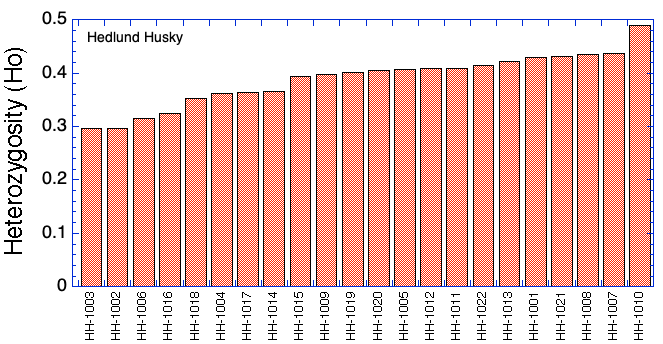
Genetic Structure
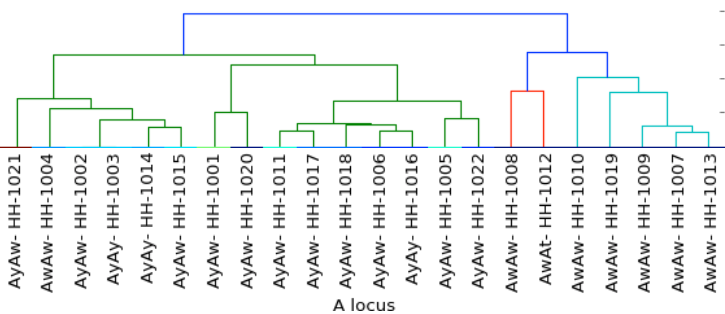
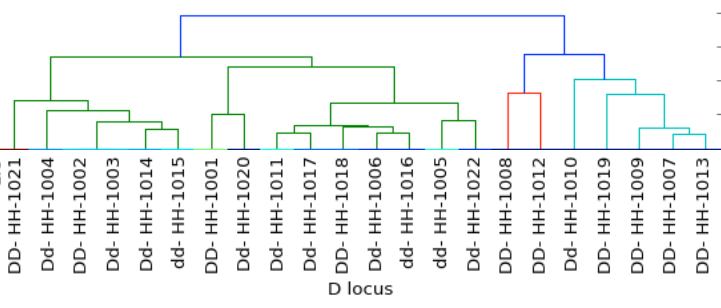
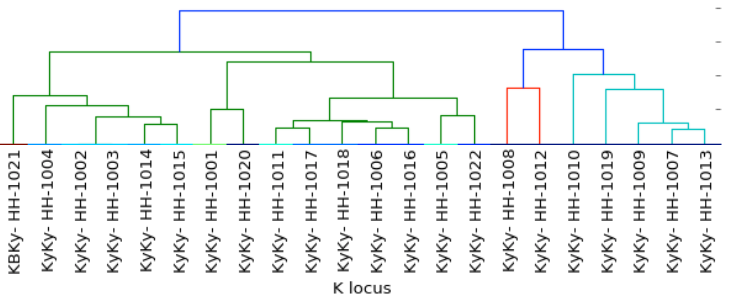
The dendrogram and heat map for genetic structure are produced from the kinship coefficients.
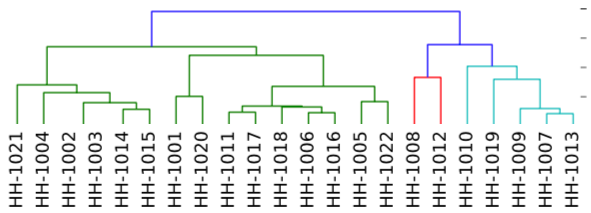
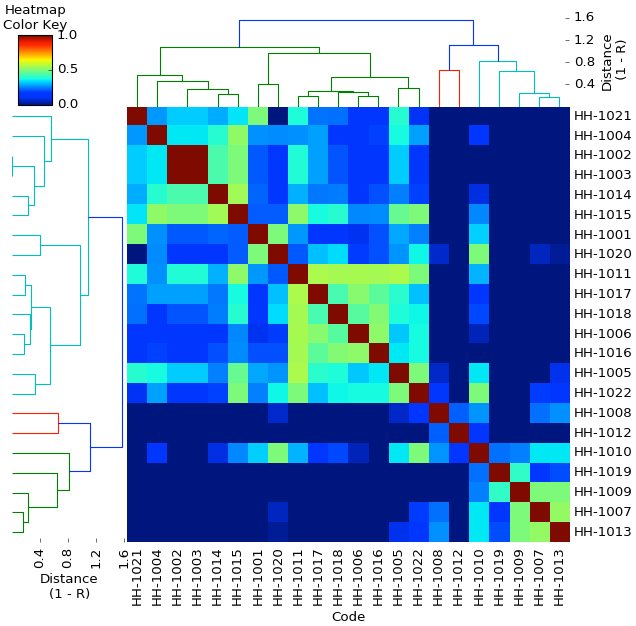
Kinship
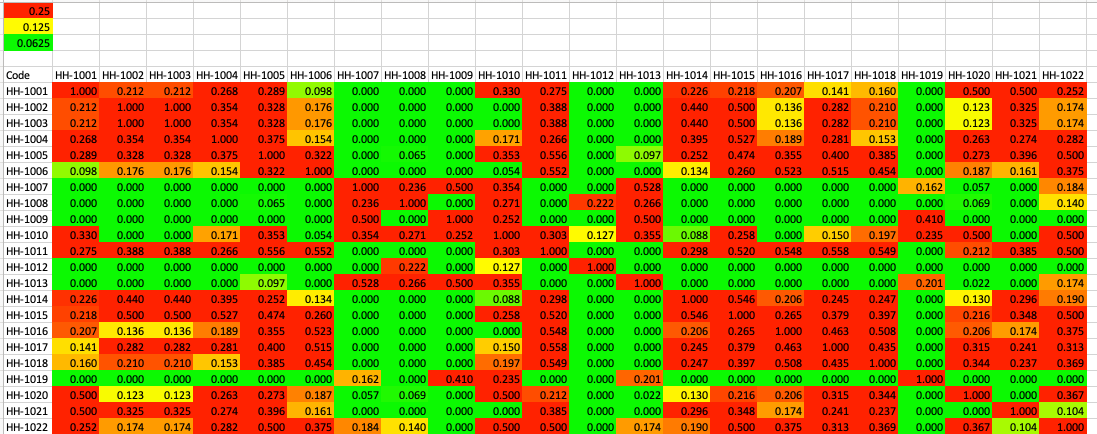
Kinship Coefficients & Litter COI
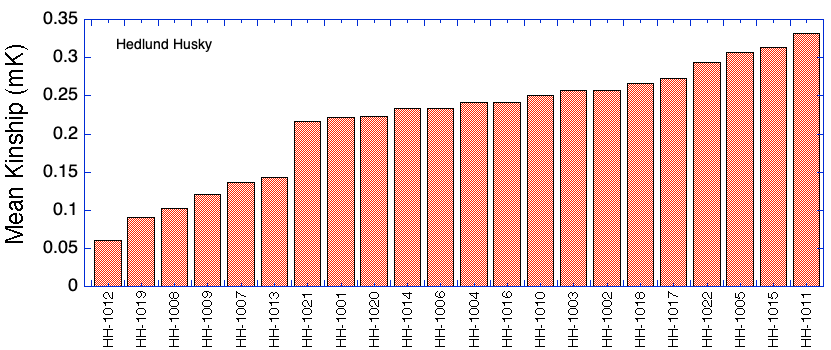
The kinship coefficient (K) is the fraction of the genome shared by two individuals that is homozygous by descent, so it is a pairwise measure of relatedness.
This kinship matrix is color coded to identify cells in which K < 0.0625 (6.25%; green, equivalent to a cross of first cousins), K = 0.125 (12.5%; yellow, half-sib cross), and K > 0.25 (25%; red, full sib cross). The kinship coefficient between a male and female is also the predicted average inbreeding coefficient of their offspring if they produced a litter.
ROH
Runs of Homozygosity
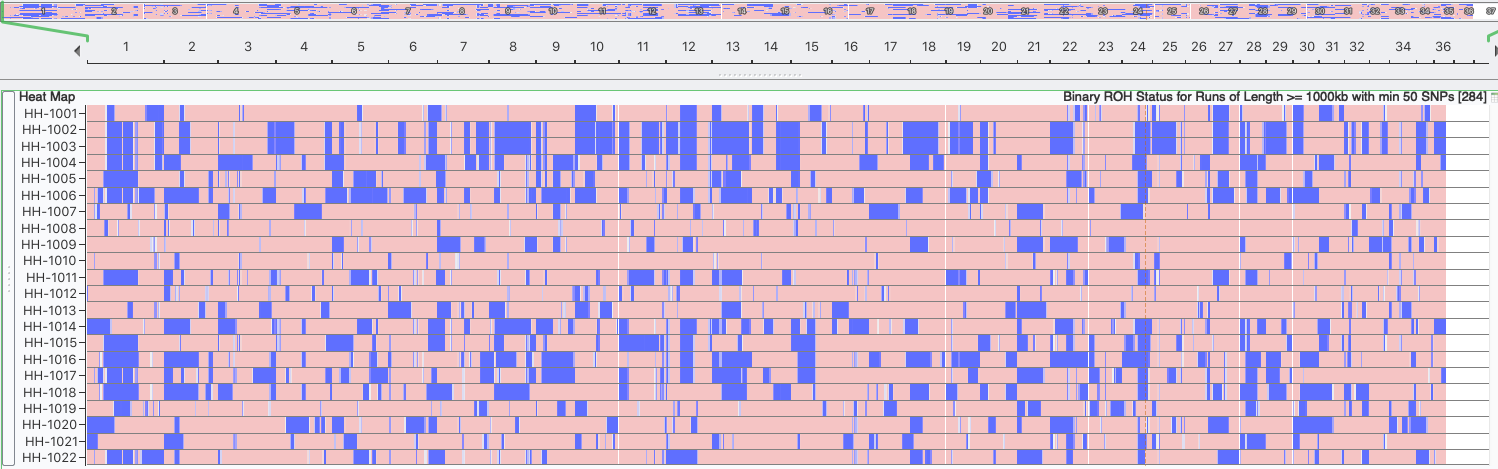
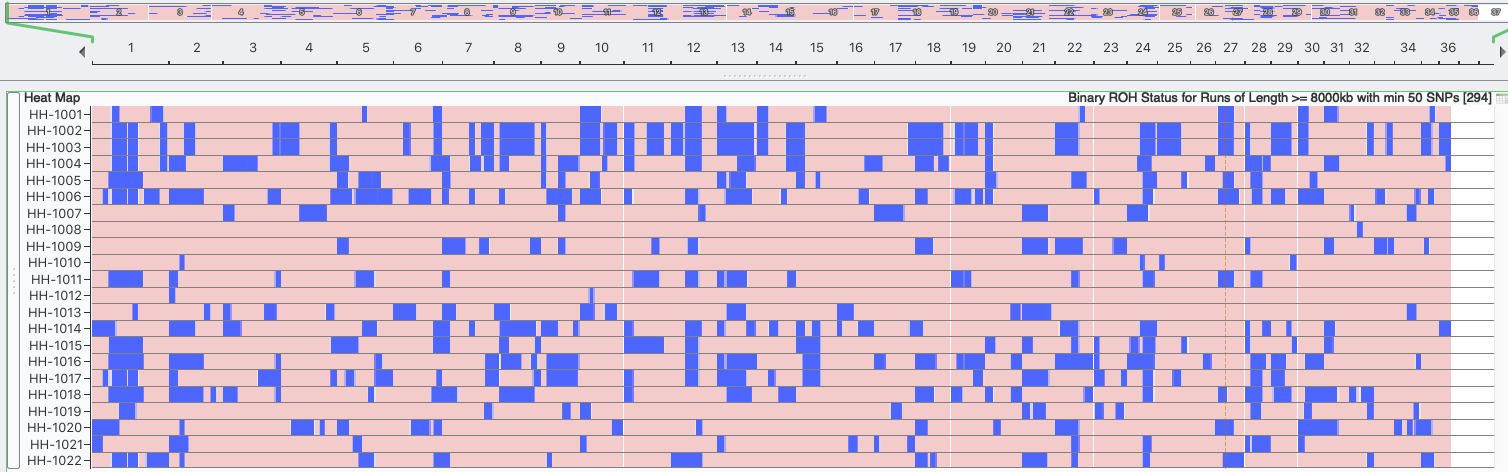
Inbreeding tends to produce runs (blocks) of homozygosity (ROH) on the chromosomes. Over time, the crossing-over of chromosomes during meiosis can split up blocks of homozygosity, so the largest blocks are likely to be the most recent inbreeding and smaller blocks reflect older inbreeding. ROH are used to estimate inbreeding from SNP data.
Learn more about Runs of Homozygosity.
Inbreeding: 25 generations (1000 kb)
Inbreeding: 6 generations (8000 kb)
mtDNA, X,Y
CODES
mtDNA haplotypes
x – A29a
ww- A11a
xxx- A247
ooo- A16/17/99/100
Y chromosome haplotypes
x- Hc.1
xxx- Ha.4
Traits
Coat Color
Health
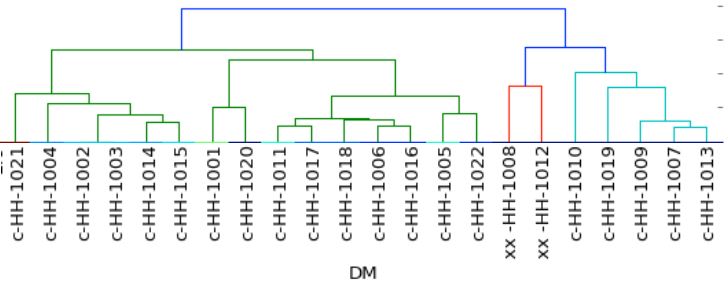
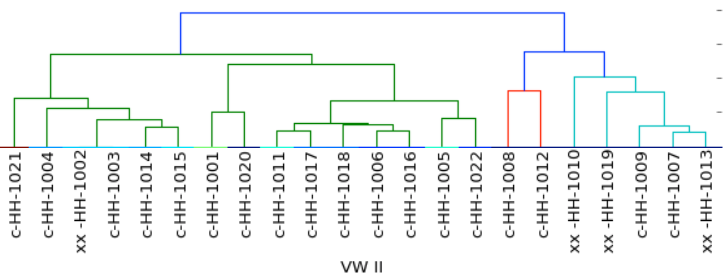
c- clear
xx- carrier
xxxx- homozygous
Degenerative Myelopathy
Von Willebrands Disease II (VWF Exon 28)
PCA
Principal Components Analysis