Genetic Diversity
Traits & Disorders
Kinship
Genetic Ranks
Genetic Structure
ROH
Traits*
Health*
mtDNA & Y Haplotypes*
PCA*
Genetic Diversity
Error
You are trying to load a table of an unknown type. Probably you did not activate the addon which is required to use this table type.
You are trying to load a table of an unknown type. Probably you did not activate the addon which is required to use this table type.
Traits & Disorders
Traits & Disorders
Error
You are trying to load a table of an unknown type. Probably you did not activate the addon which is required to use this table type.
You are trying to load a table of an unknown type. Probably you did not activate the addon which is required to use this table type.
Kinship
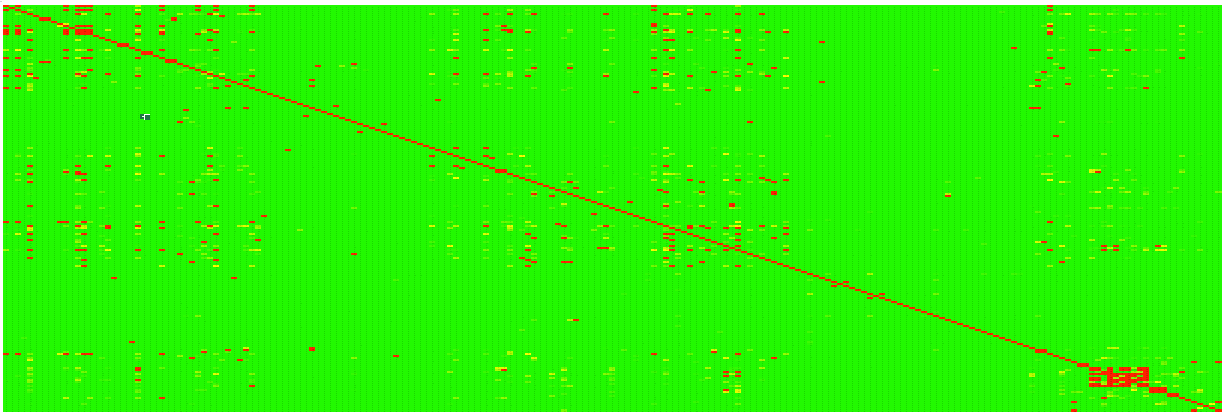
The number in each cell is the kinship coefficient of that pair of animals. The kinship coefficient between a male and female is also the predicted average inbreeding coefficient of their offspring if they produced a litter.
This kinship matrix can be color coded to indicate high, medium, or low kinship.
Error
You are trying to load a table of an unknown type. Probably you did not activate the addon which is required to use this table type.
You are trying to load a table of an unknown type. Probably you did not activate the addon which is required to use this table type.
Genetic Ranks



Genetic Structure
The dendrogram and heat map for genetic structure are produced from the kinship coefficients. Males and females are analyzed separately because there are too many dogs to display on a single chart. The male and female charts are different because they are constructed using relationships only with the other dogs in the analysis.

ROH
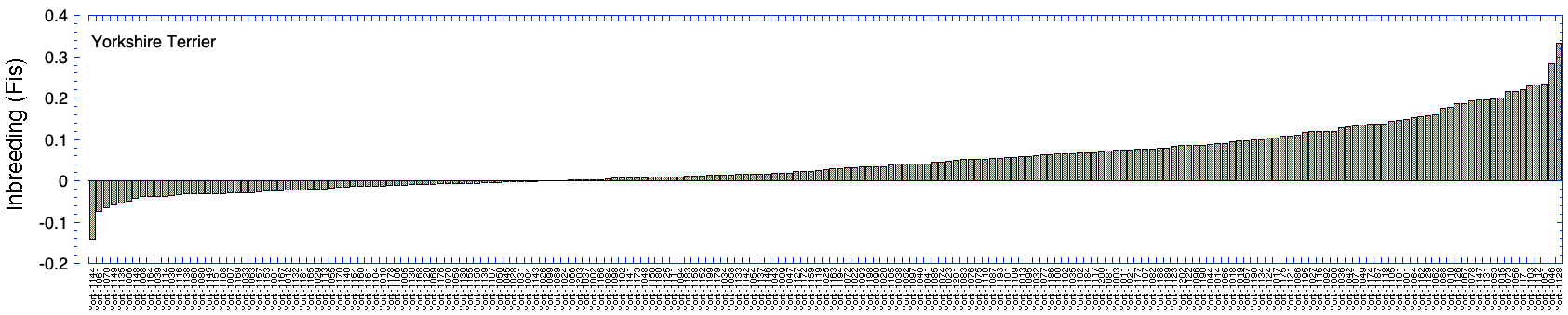
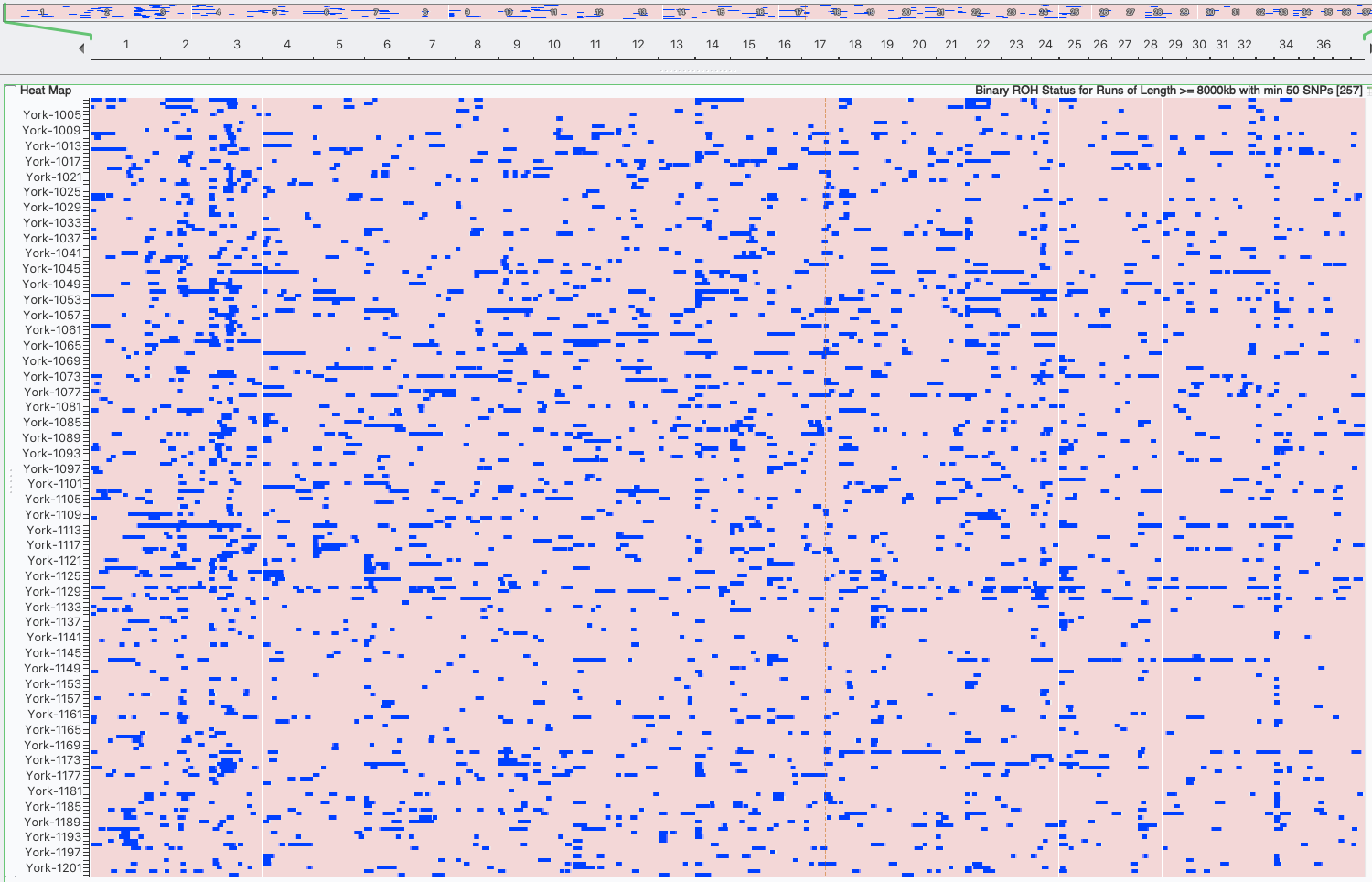
Runs of Homozygosity (ROH)
Inbreeding tends to produce runs (blocks) of homozygosity (ROH) on the chromosomes. Over time, the crossing-over of chromosomes during meiosis can split up blocks of homozygosity, so the largest blocks are likely to be the most recent inbreeding and smaller blocks reflect older inbreeding. ROH are used to estimate inbreeding from SNP data.
Learn more about Runs of Homozygosity.
Inbreeding: 25 generations (1000 kb)
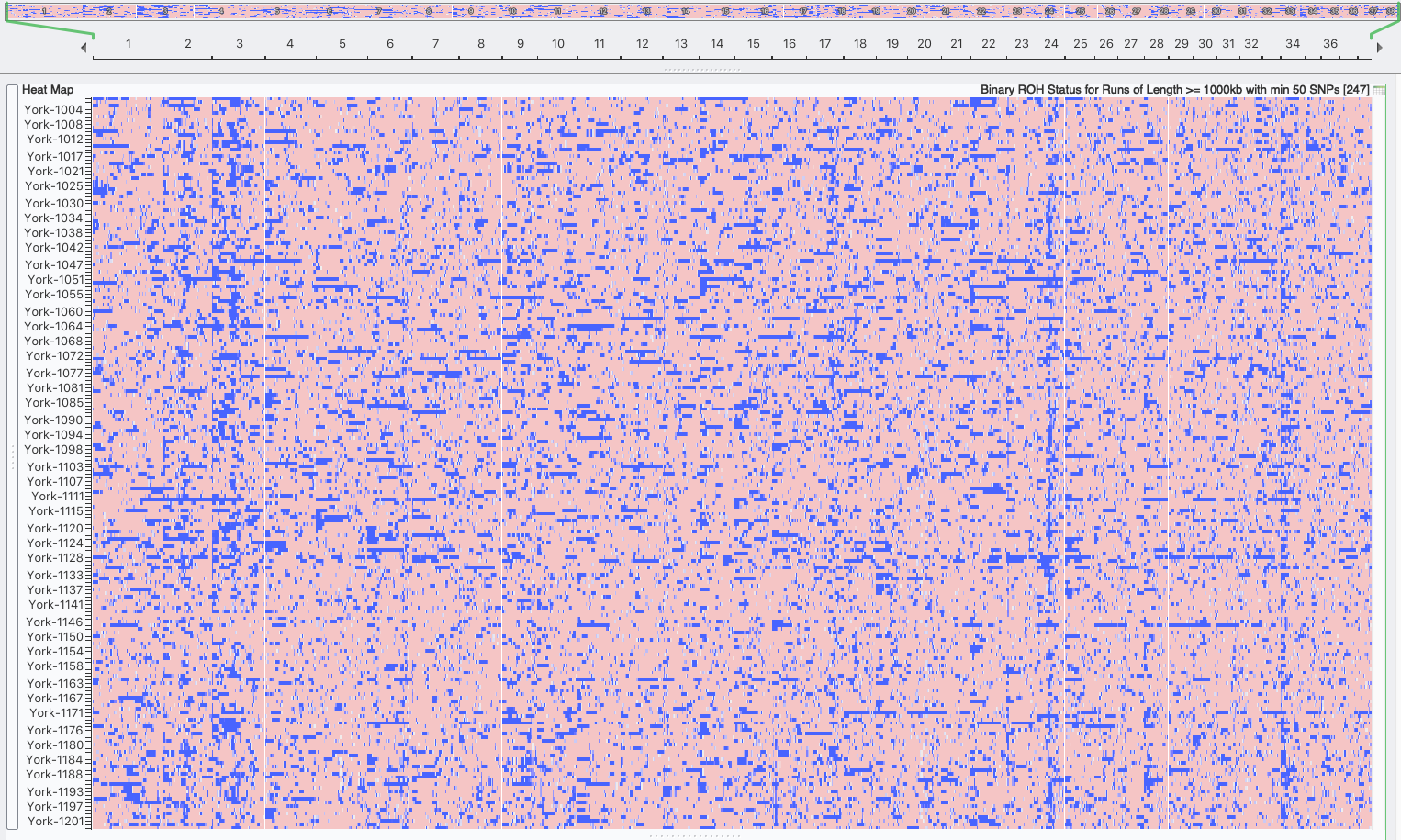
Inbreeding: 6 generations (8000 kb)
Traits*
See the Health data for examples of how the trait data coul dbe coded here.
Health*
These are dendrograms from the kinship data. Superimposed on them are data for occurrence of various disorders. For example, mtDNA haplotypes are coded, and those codes are mapped on the dogs in the histogram. The haplotypes are added below the horizontal axes.. When I find the coding key for these dendrograms, I’ll add them so this makes more sense… 🙂 Note that for most of these, we have a lot of animals with no trait/health data, and it would b useful to get this information for dogs in particular clusters indicating risk of some health problem.
PVSA
PRA
JLP
ADAMS17
mtDNA & Y Haplotypes*
mtDNA Haplotypes
Codes:
(add here)

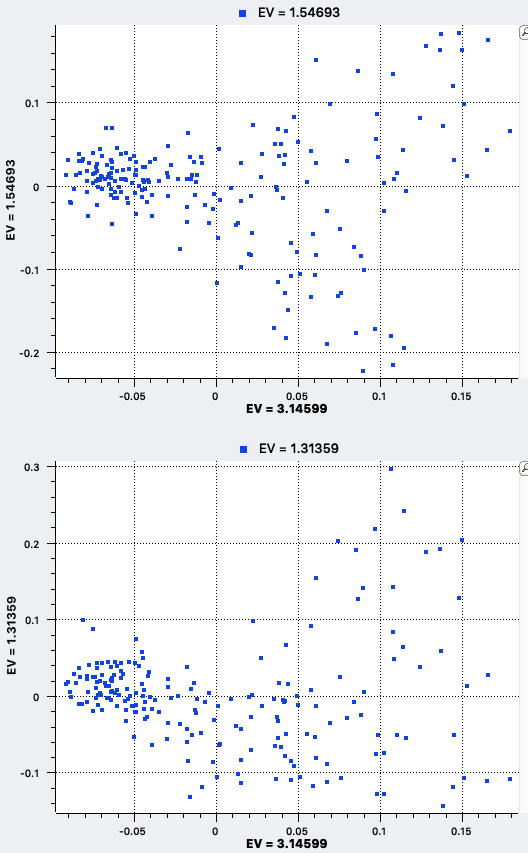
PCA*